
Table of Contents
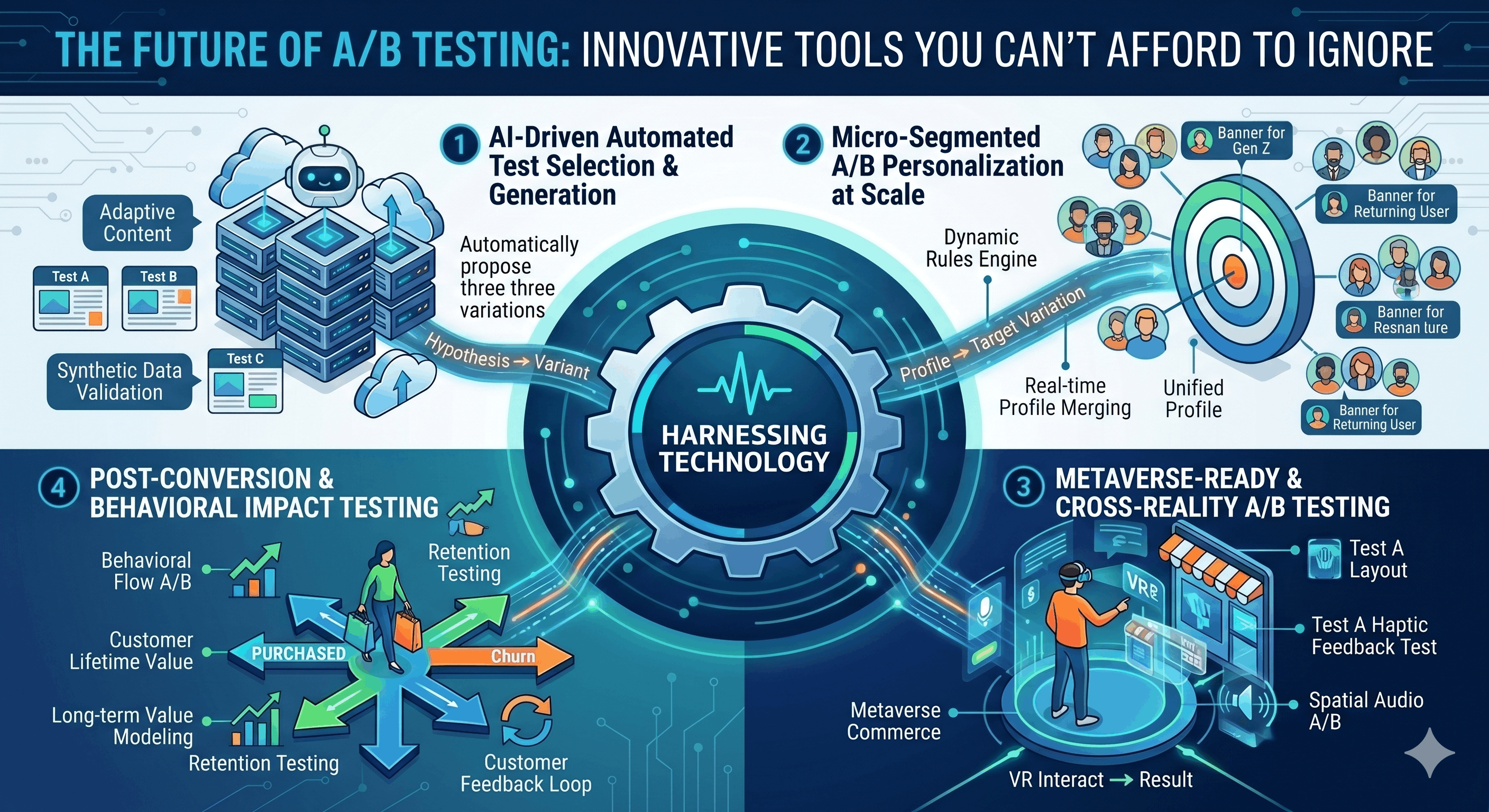
The Future of A/B Testing: Innovative Tools You Can’t Afford to Ignore
In the rapidly evolving landscape of digital marketing and product development, A/B testing remains a cornerstone for data-driven decision-making. However, as technology advances, so too do the tools and methodologies available for conducting these tests. The future of A/B testing promises to be more innovative, efficient, and insightful than ever before. Here are some transformative tools and trends that organizations cannot afford to ignore.
1. Machine Learning and AI-Powered A/B Testing
One of the most significant trends shaping the future of A/B testing is the integration of machine learning (ML) and artificial intelligence (AI). Traditional A/B testing often requires large sample sizes to achieve statistical significance, making it time-consuming and sometimes impractical.
AI-driven platforms can analyze vast amounts of data in real time, identifying patterns and user behavior more efficiently. Tools like Optimizely’s Intelligent Experimentation and Google Optimize leverage AI to automatically pinpoint winning variations, minimizing human bias and accelerating the decision-making process. This tech not only refines the testing process but also enhances personalized user experiences.
2. Multivariate Testing
While A/B testing typically compares two variations, multivariate testing (MVT) allows marketers to test multiple variables simultaneously. This is crucial for assessing complex user interactions on websites or in apps.
Platforms like VWO and Adobe Target support MVT by allowing marketers to understand how different elements work together. By using statistical algorithms, these tools can help businesses identify interactions that are often overlooked in simpler A/B tests, providing richer insights into user preferences.
3. Real-Time Data Analysis
The future of A/B testing lies in the ability to make real-time decisions based on instantaneous data analysis. Tools like Mixpanel and Amplitude are leading the charge by providing in-depth analytics that can guide instant changes during testing.
This capability allows businesses to iterate rapidly, adapting campaigns or product features based on immediate user feedback. Real-time analysis not only enhances testing speed but also ensures that organizations remain agile and responsive to consumer behavior.
4. Integration with Customer Journey Mapping
The integration of A/B testing with customer journey mapping software enhances the ability to test hypotheses at various touchpoints along the customer journey. Tools like Hotjar and FullStory provide insights into user interactions, enabling marketers to design A/B tests that are deeply informed by user behavior patterns.
By aligning A/B tests with specific stages of the customer journey, organizations can create tailored experiences that resonate more authentically with users, ultimately leading to better conversion rates.
5. Cross-Channel Testing
As digital marketing becomes increasingly omnichannel, the ability to A/B test across channels is essential. Platforms like Klaviyo and Mailchimp allow for integrated testing across email, social media, and websites, ensuring that marketing strategies are coherent and impactful.
Cross-channel A/B testing identifies how variations perform across different platforms, enabling marketers to optimize their strategies holistically. This capability ensures a seamless brand experience for users, increasing the likelihood of engagement and conversion.
6. User Feedback Integration
Collecting qualitative feedback alongside quantitative data is crucial for understanding user motivations. Tools like Hotjar’s feedback polls or Qualaroo allow businesses to gather insights directly from users regarding their experiences with different variations.
By integrating user feedback into the A/B testing process, businesses can refine their approach, focusing on what truly matters to their audience. This combination of qualitative and quantitative data leads to more comprehensive insights and better decision-making.
7. Automation and No-Code Tools
As technology becomes more accessible, no-code platforms are democratising A/B testing. Tools like LaunchDarkly and Unbounce enable marketers to create and manage tests without needing extensive technical expertise. This shift empowers more team members to participate in experimentation, fostering a culture of innovation.
Automation further streamlines the process, allowing teams to set up tests without manual intervention. This not only saves time but also reduces the risk of errors, ensuring that organizations can focus on analysis and strategy rather than the nuts and bolts of testing.
Conclusion
The future of A/B testing is bright, driven by innovations in technology that make the process more sophisticated, efficient, and user-centric. Organizations that embrace these advanced tools and methodologies will find themselves not only keeping pace with industry trends but also gaining a competitive edge. As data becomes increasingly central to decision-making, leveraging these innovative A/B testing tools will be essential to enhancing user experiences and driving business growth. Embrace the future today—your users will thank you.