
Table of Contents
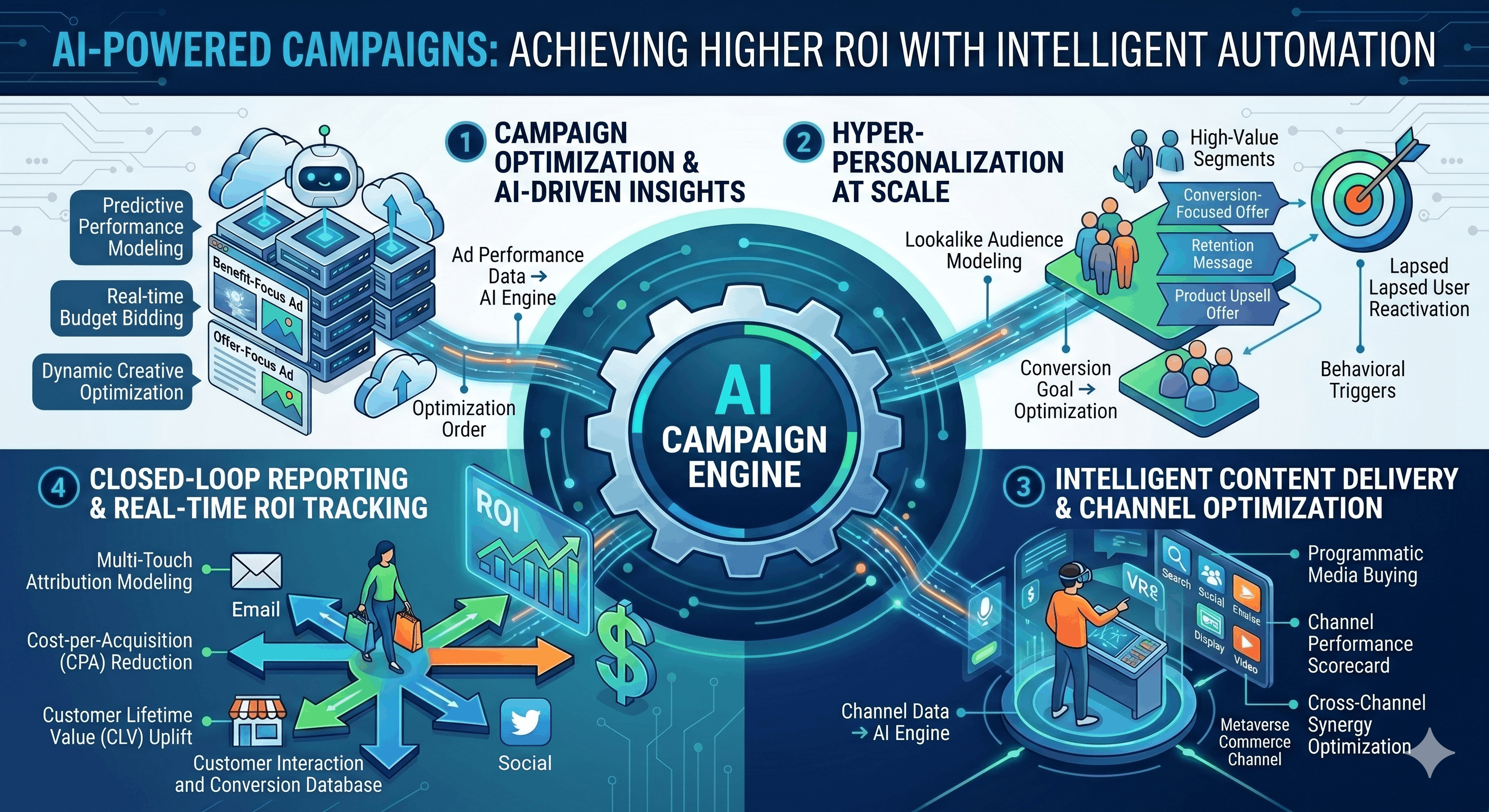
In a digital landscape overflowing with data, businesses face an ever-increasing challenge: how to maximize return on investment (ROI) from their marketing campaigns. Enter AI-powered campaigns, where intelligent automation and advanced algorithms are revolutionizing the advertising landscape. This article explores how integrating AI into marketing strategies enhances efficiency, personalizes customer engagement, and ultimately drives greater ROI.
Understanding AI in Marketing
Artificial Intelligence (AI) encompasses a range of technologies that enable machines to mimic human intelligence. In marketing, AI analyzes vast amounts of data to provide insights, predict consumer behavior, and automate various processes. From chatbots that simplify customer interactions to predictive analytics that inform campaign strategies, AI is transforming traditional marketing methodologies.
Key Components of AI-Powered Campaigns
Data Analysis and Insights
- AI excels in processing large datasets to identify patterns and trends that may go unnoticed by human analysts. By utilizing predictive analytics, businesses can forecast customer behaviors, segment audiences more effectively, and tailor campaigns to meet the needs of specific demographics.
Personalization
- One-size-fits-all marketing is no longer effective. AI enables hyper-personalization, allowing brands to deliver tailored content to individual consumers. By analyzing user behavior, preferences, and purchase history, AI can recommend products or services that resonate with each potential customer, significantly improving engagement rates.
Automated Content Creation
- AI can assist in generating content, such as personalized emails, social media posts, and even product descriptions. Tools that leverage natural language processing (NLP) can produce relevant and engaging content at scale while maintaining brand voice and tone.
Dynamic Pricing Models
- AI-driven pricing strategies analyze market conditions, competition, and consumer demand in real-time, allowing businesses to adjust prices dynamically. This flexibility enables companies to maximize revenue while remaining competitive.
- Predictive Lead Scoring
- AI can streamline sales processes by evaluating and scoring leads based on their likelihood to convert. By identifying high-value prospects, marketing teams can focus their efforts on leads that are most likely to generate profits, reducing waste and increasing efficiency.
Enhanced Campaign Efficiency
AI-powered solutions optimize marketing campaigns through various means:
Automating Ad Placement: Programmatic advertising uses AI to automatically buy ad space in real-time, based on data-driven insights. This ensures that ads reach the right audience at the right time, reducing costs and maximizing impact.
Optimizing A/B Testing: AI can conduct extensive A/B tests more efficiently than human teams. By analyzing which variables perform best in real-time, AI can rapidly iterate and enhance campaigns before budgets are exhausted.
- Monitoring and Reporting: With AI, businesses can gain real-time insights into campaign performance through automated dashboards. These dashboards provide granular analysis, enabling teams to pivot strategies based on immediate feedback.
Measuring ROI Effectively
The ultimate goal of any marketing campaign is a positive ROI. AI not only helps to improve ROI but also offers methodologies to measure it accurately. Through AI, companies can attribute revenue to specific channels and tactics, allowing for a clearer understanding of what works.
Attribution Modeling: AI enhances attribution models by analyzing multi-touch data, meaning businesses can see how various touchpoints contribute to conversions.
- Lifetime Value Prediction: By predicting a customer’s lifetime value (CLV), AI helps businesses prioritize marketing efforts toward the most profitable segments, ensuring that resources are allocated efficiently.
Real-World Examples of AI-Powered Success
Coca-Cola: Coca-Cola uses AI to craft personalized marketing strategies based on consumer behavior analysis. The result has been campaigns with higher engagement rates and increased sales.
Amazon: The e-commerce giant utilizes AI recommendations to enhance personalized shopping experiences. This has substantially increased conversion rates—over 35% of Amazon’s revenue comes from its recommendation engine.
- Spotify: Spotify’s AI algorithms create personalized playlists, driving user engagement for the music streaming service. Their ability to tailor recommendations has resulted in higher user retention and subscription rates.
Conclusion
AI-powered campaigns signify a paradigm shift in the marketing landscape. By leveraging intelligent automation, businesses can achieve higher ROI while fostering deeper connections with customers. As technology continues to evolve, those who embrace AI in their marketing strategies will not only survive but thrive in an increasingly competitive environment.
Implementing AI may feel daunting, but with a strategic approach, the benefits far outweigh the challenges. Whether you’re optimizing ad spend, personalizing user experience, or automating content creation, AI holds the key to unlocking new levels of success in your marketing campaigns.