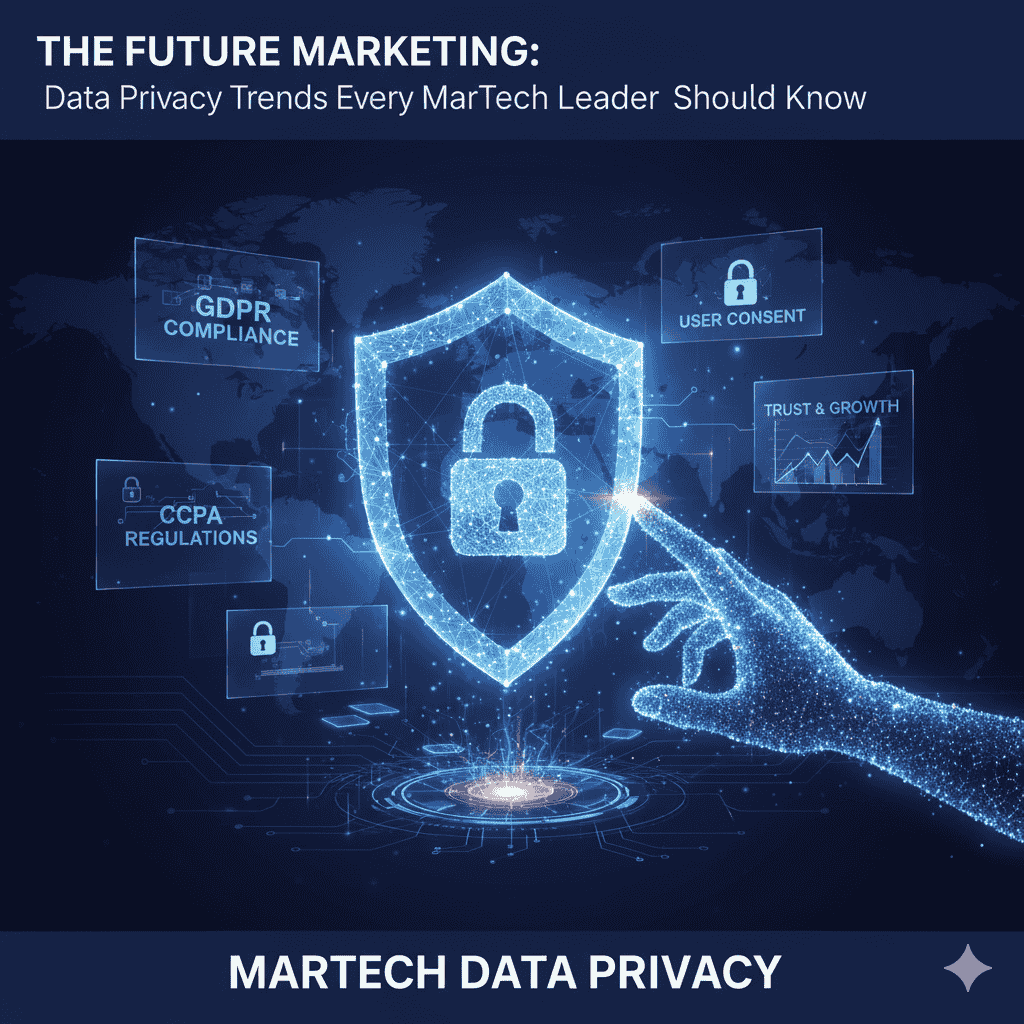
In the ever-evolving landscape of marketing technology (MarTech), data privacy has emerged as a cornerstone for building trust and delivering value. As consumers become increasingly aware of their digital footprint, MarTech leaders must adapt to a reality where data privacy is not just a regulatory necessity but a competitive advantage. This article explores key trends in data privacy that will shape the future of marketing.
1. Heightened Regulatory Scrutiny
Governments worldwide are introducing stricter data privacy regulations, such as the General Data Protection Regulation (GDPR) in Europe and the California Consumer Privacy Act (CCPA) in the United States. These regulations empower consumers with more control over their data and impose heavy penalties on companies that fail to comply. MarTech leaders must stay informed about these regulations to ensure compliance and avoid financial repercussions.
Key Action Points:
- Regularly audit data practices and refine systems to meet compliance standards.
- Invest in legal expertise to navigate complex regulatory landscapes.
2. The Shift to First-Party Data
As third-party cookies face obsolescence, driven by browser restrictions and privacy regulations, brands are pivoting towards first-party data collection strategies. First-party data—gathered directly from consumers through interactions—provides rich insights and is crucial for personalized marketing efforts.
Key Action Points:
- Develop engaging loyalty programs to incentivize data sharing.
- Utilize user-generated content to enhance first-party data collection.
3. Enhanced Transparency and Consent Management
Consumers now demand transparency regarding how their data is collected and used. Effective consent management practices can cultivate trust. Brands that openly communicate their data practices and allow users to control their data preferences will stand out.
Key Action Points:
- Implement clear consent forms that outline usage policies.
- Use preference centers that allow consumers to manage their data settings easily.
4. Privacy-First Marketing Technologies
Emerging MarTech solutions focus on privacy-first practices. These tools are designed to prioritize user privacy while still enabling effective marketing campaigns. AI and machine learning are playing significant roles in this space, helping companies decipher consumer behavior without compromising privacy.
Key Action Points:
- Explore AI-driven analytics that respect user anonymity.
- Seek MarTech vendors that prioritize privacy by design in their offerings.
5. Ethical Data Use
Beyond compliance, brands are now being held to higher ethical standards regarding data use. Consumers expect that their data will not only be protected but also used responsibly. Ethical marketing involves leveraging data to enhance customer experiences rather than exploit their information for profit.
Key Action Points:
- Foster a culture that values ethical data practices within the organization.
- Use data to create value for customers, such as through personalized recommendations that genuinely enhance their experiences.
6. The Rise of Privacy-Centric Marketing Strategies
As privacy takes center stage, marketing strategies must evolve. This includes a focus on contextual advertising, which delivers relevant messages based on the consumer’s current environment rather than relying solely on user data. This approach respects consumer privacy while still pushing marketing objectives.
Key Action Points:
- Develop strategies that leverage context over cookies to target audiences effectively.
- Collaborate with publishers who are investing in privacy-centric ad solutions.
7. Building Consumer Trust as a KPI
In a privacy-sensitive environment, trust is a critical currency. Brands must work diligently to earn and maintain consumer trust, making it a key performance indicator (KPI) in marketing strategies. Marketers should measure brand sentiment and customer perceptions around data privacy.
Key Action Points:
- Regularly conduct surveys to gauge consumer trust levels and address concerns.
- Share success stories highlighting the positive impact of ethical data use on customers.
Conclusion
The future of marketing is being reshaped by data privacy trends that challenge the status quo. MarTech leaders must not only comply with regulations but also embrace a privacy-first mindset that prioritizes transparency, ethical data use, and consumer trust. By adapting to these trends, companies can turn data privacy into a competitive advantage, fostering deeper relationships with consumers in an increasingly digital world. As we move forward, the intersection of marketing and data privacy will define the industry’s landscape—setting the stage for more responsible and effective marketing strategies.